
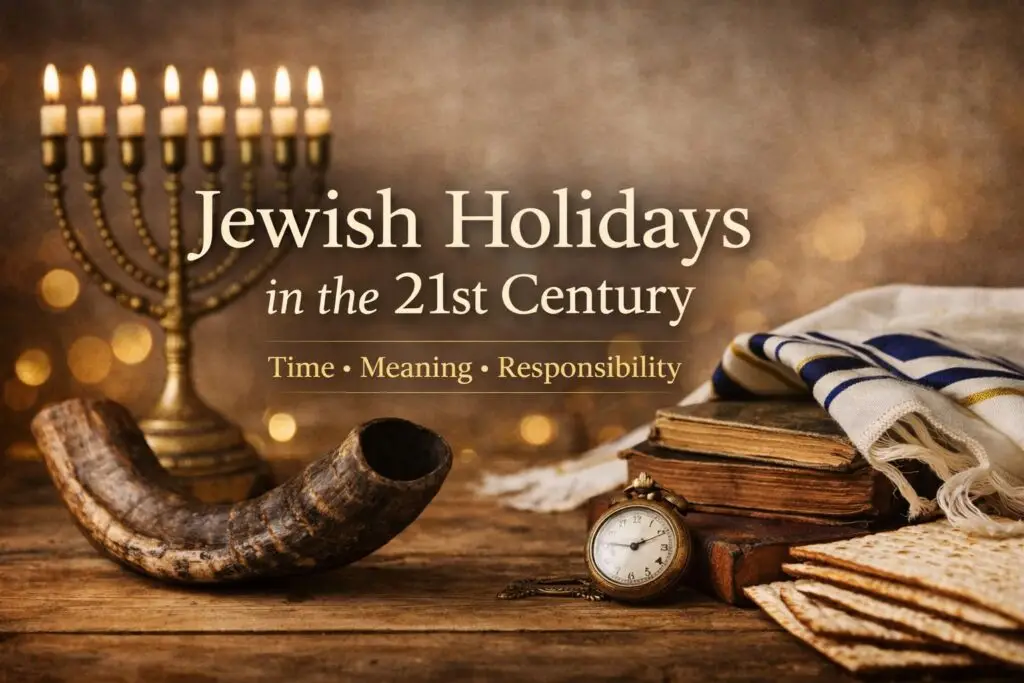
Holidays as Moral Time, Not Ritual Commemoration
“The Holy Days are the unbroken master code of Judaism. Decipher them, and you will discover the inner sanctum of this religion. Grasp them, and you hold the heart of the faith in your hand. The holy days are the quintessential Jewish religious expression because the main teachings of Judaism are incorporated in their messages.”
Irving Greenberg
Jewish holidays are not anniversaries of the past. They are disciplines of time—structures that interrupt ordinary life and demand judgment, memory, and responsibility in the present.
In Judaism, time is not neutral. Days are shaped so that human beings do not simply move forward, but stop, reflect, and answer for how life is being lived. Festivals, fasts, and sacred seasons exist to slow action, deepen awareness, and re-orient responsibility under changing historical conditions.
This page explores Jewish holidays not as fixed rituals, but as living frameworks through which Judaism responds to the pressures of the modern world.