The annual cycle of Torah reading reaches a turning point this week, when the sweeping narratives of Genesis and Exodus—the opening books of the Jewish Scriptures—give way to a very different kind of text as the Torah enters its third book.
After the drama of the Exodus—the plagues, the crossing of the sea, the revelation at Sinai—the reader suddenly encounters a work of another character: meticulous regulations, precise procedures, and an almost architectural attention to ritual detail.
This shift may help explain why the book received, in the Latin tradition, the name Leviticus. The title reflects the impression that the text is essentially a manual for the priestly tribe of Levi, concerned primarily with ritual duties and temple procedures.
Yet it is not only non-Jewish readers who have tended to reduce the book in this way. Within Jewish learning as well, attention often gravitates toward the individual legal cases contained in Leviticus—their halakhic implications and later interpretations—rather than toward the book as a whole and the vision that emerges from its structure.
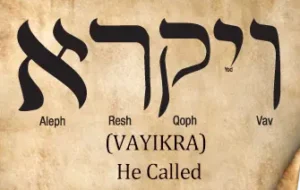
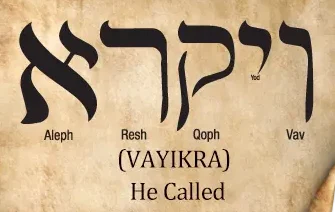
The Hebrew title, Vayikra—“And He called”—suggests something quite different: a sustained divine address. Yet the text is frequently approached verse by verse rather than as a single unfolding message.
But this third book of the Torah is concerned with something far larger than ritual detail. It constructs the architecture of a Jewish civilization: a network of laws governing how human beings relate to one another, to political authority, to the sacred, and even to the land itself. It translates the exhilaration of freedom into a disciplined moral order.
Vayikra is therefore not merely a collection of ritual regulations. It is, in effect, a philosophical text about how a society organizes freedom, responsibility, power, and justice.
If Bereshit (Genesis) tells the story of origins and Shemot (Exodus) recounts the drama of liberation, Vayikra confronts the deeper question:
What is freedom for?
Without Vayikra, the Exodus would remain a dramatic political event but not yet a civilizational transformation. Freedom alone does not create a society. A liberated population must still learn how to order its life, its institutions, and its moral commitments.
Vayikra marks the moment when liberation becomes a disciplined moral project.
Containing the largest concentration of core Jewish ideas—and more laws than any other book of the Torah—Vayikrareveals a comprehensive vision of society.
Taken as a whole, Vayikra understands the relationship with the earth and the pursuit of justice within society as part of a single continuum of order within God’s universe.
In an age when humanity struggles to manage the consequences of its own technological and political power, Vaykraspeaks with unexpected clarity. Human capacity now extends far beyond anything imagined in antiquity. Technologies capable of transforming ecosystems, economies, and even biological life itself are already reshaping the human condition.
In this context, the ancient discipline of responsibility articulated in Vaikra appears less like a relic of the past and more like a blueprint for the future.
The third book of the Torah presents a philosophy of ordered freedom. It argues that a society worthy of human dignity must structure life through law, discipline, and ethical responsibility.
From a philosophical perspective, Vayikra is less a ritual manual than a civilizational blueprint.
At the heart of the book lies a radical claim: a society becomes meaningful only when everyday life is governed by ethical responsibility.
Instead of restricting religion to the sanctuary or the priesthood, the text extends moral concern into all areas of life:
- agriculture
- commerce
- family relations
- treatment of workers
- care for the vulnerable
- judicial fairness
The deeper message of Vayikra is that civilization survives not because of power but because of self-limitation.
Human beings possess the ability to dominate the world.
Vayikra asks whether they also possess the wisdom to restrain themselves—for the sake of justice, life, and the future.