
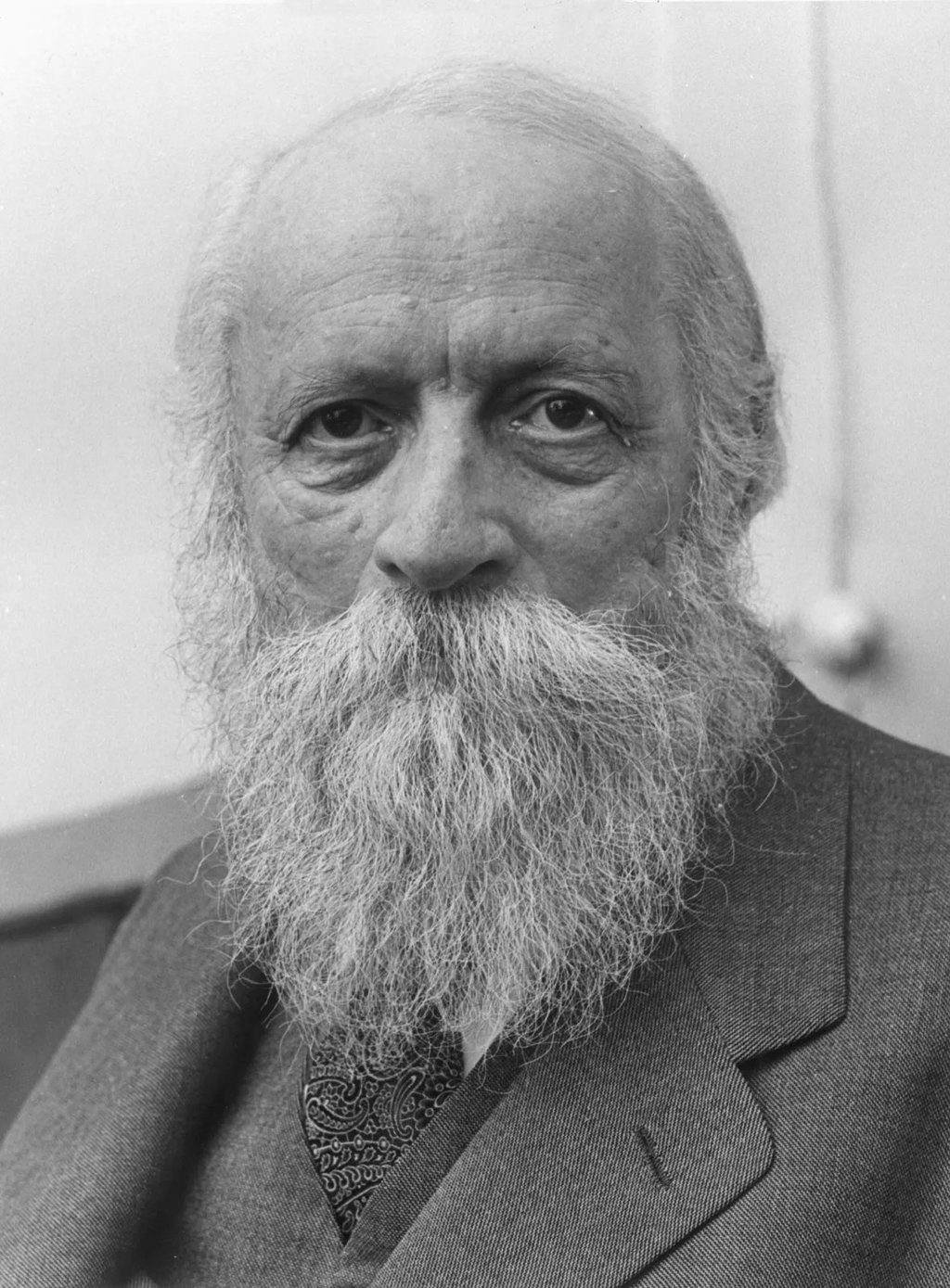
The Existential Jewish Philosophy of Martin Buber
Between seeking and finding lies the tension of human life
JEWISH PHILOSOPHY
"Each of us is encased in an armor whose task is to ward off signs. Signs happen to us without respite, living means being addressed; we would need only to present ourselves and to perceive. But the risk is too dangerous for us, the soundless thundering seems to threaten us with annihilation, and from generation to generation we perfect the defense apparatus. All our knowledge assures us, "Be calm, everything happens as it must happen, but nothing is directed at you, you are not meant; it is just 'the world', you can experience it as you like, but whatever you make of it in yourself proceeds from you alone, nothing is required of you, you are not addressed, all is quiet."
Each of us in encased in an armor which we soon, out of familiarity, no longer notice. There are only moments which penetrate it and stir the soul to sensibility. And when such a moment has imposed itself on us and we then take notice and ask ourselves, "Has anything particular taken place? Was it not of the kind I meet every day?" then we may reply to ourselves, "Nothing particular, indeed, it is like this every day, only we are not there every day."
The signs of address are not something extraordinary, something that steps out of the order of things, they are just what goes on time and again, just what goes on in any case, nothing is added by the address. [...] What occurs to me addresses me. In what occurs to me the world-happening addresses me."[1]
"Each man has a sphere of being, far extended in space and time, which is allotted to him to be redeemed through."[2]
"Every person born into this world represents something new, something that never existed before, something original and unique. "It is the duty of every person in Israel to know and consider that he is unique in the world, for if there had been someone like him there would be no need for him to be in the world. Every single man is a new thing in the world and is called upon to fulfill his particularity in this world. For verily: that this is not done is the reason why the coming of the Messiah is delayed." Every man's foremost task is the actualization of his unique, unprecedented and never recurring potentialities, and not the repetition of something that another, and be it ever the greatest has already achieved."[3]
"[...] everyone should search his own heart, choose his particular way, bring about the unity of his being, begin with himself [...] What I am to choose my particular way for? What I am to unifying my being for? The reply is: not for my own sake. This is why the previous injunction was: to begin with oneself. To begin with oneself but not to end with oneself; to start from oneself, but not to aim at oneself; to comprehend oneself but not to be preoccupied with oneself."[4]
"Judaism regards each man's soul as a serving member of God's creation which, by man's work, is to become the kingdom of God; thus, no soul has its object in itself, in its own salvation. Thus, each is to know itself, purify itself, perfect itself, but not for its own sake-neither for the sake of its temporal happiness nor for that of its eternal bliss-but for the sake of the work which is destined to perform upon the world."[5]
“That one accepts the concrete situation as given to him does not, in any way, mean that he must be ready to accept that which meets him as ‘God-given’ in its pure factuality. He may, rather, declare the extremest enmity toward this happening and treat its ‘givenness’ as only intended to draw forth his own opposing force. But he will not remove himself from the concrete situation as it actually is; he will, instead, enter into it, even if in the form of fighting against it. Whether field of work or field of battle, he accepts the place in which he is placed.” [6]
[1] BUBER, MARTIN: Between Man and Man, pp. 10-11
[2] BUBER, MARTIN: Hasidism and Modern Man, p. 102
[3] BUBER, MARTIN: Hasidism and Modern Man, pp. 139-140
[4] BUBER, MARTIN: Hasidism and Modern Man, pp. 162-163
[5] BUBER, MARTIN: Hasidism and Modern Man, pp. 165-166
[6] BUBER, MARTIN: Eclipse of God, pp. 37-38